
Is Vietnam safe for older travellers? A straight answer
Yes, for most older travellers. The real risks are traffic, petty theft, heat and uneven ground, and a private journey with a gentle pace handles most of them.
By Tripora's coordinator team · · Updated
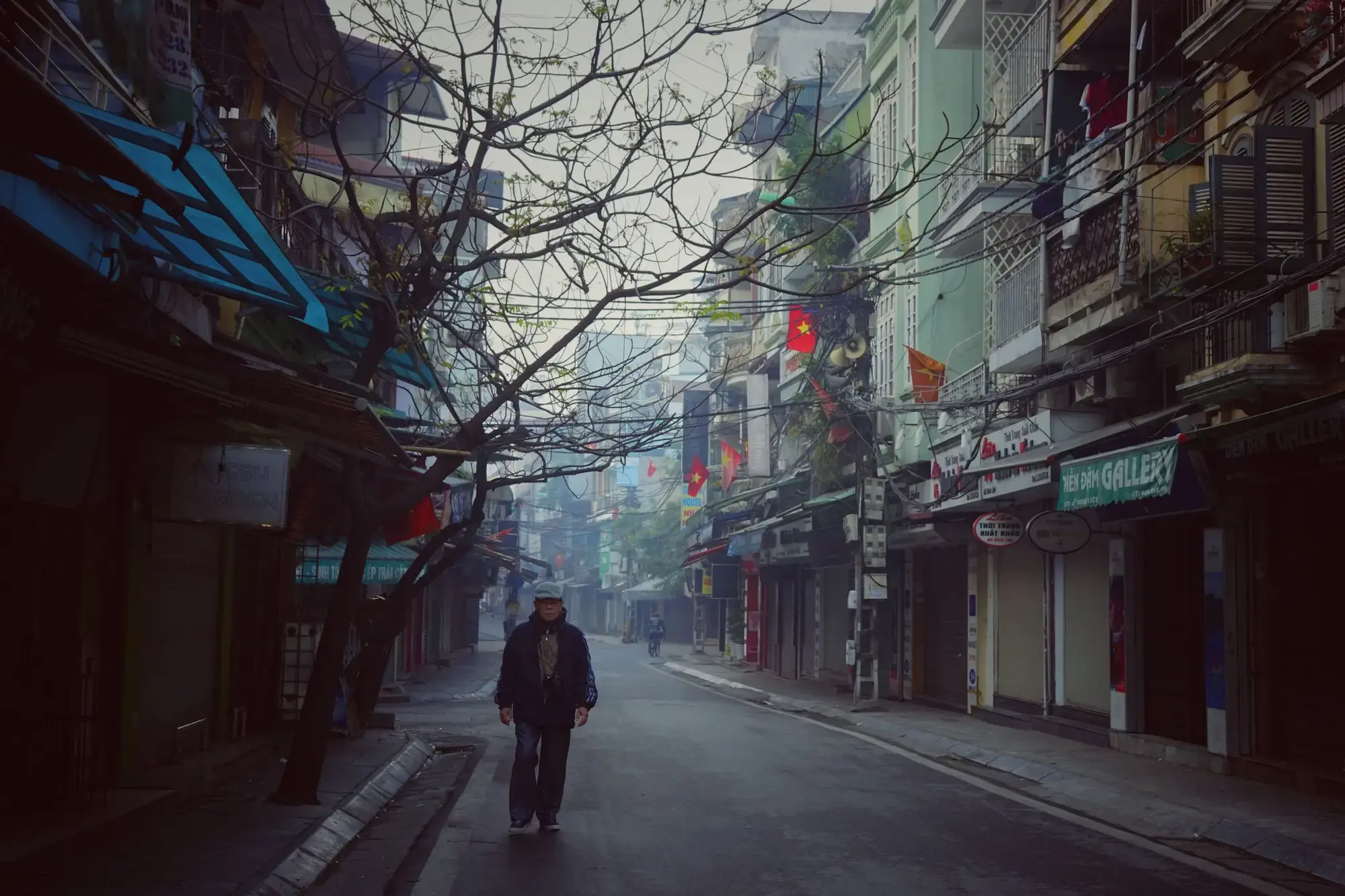
Photo: Huy Nguyen thanh, Pexels License, source
Is Vietnam safe for seniors? For most older travellers, yes: Vietnam is generally a calm and welcoming country to travel in. The risks you are likely to meet are everyday ones rather than dramatic ones, and a private journey, with your own driver and guide and a pace set around you, takes most of them out of your hands.
In short, the four things to plan for:
- Traffic: busy roads full of motorbikes, especially in Hanoi and Ho Chi Minh City.
- Petty theft: pickpockets and bag snatching in crowded streets and markets.
- Heat: warm, humid days for much of the year.
- Uneven ground: broken pavements, temple steps and boat landings.
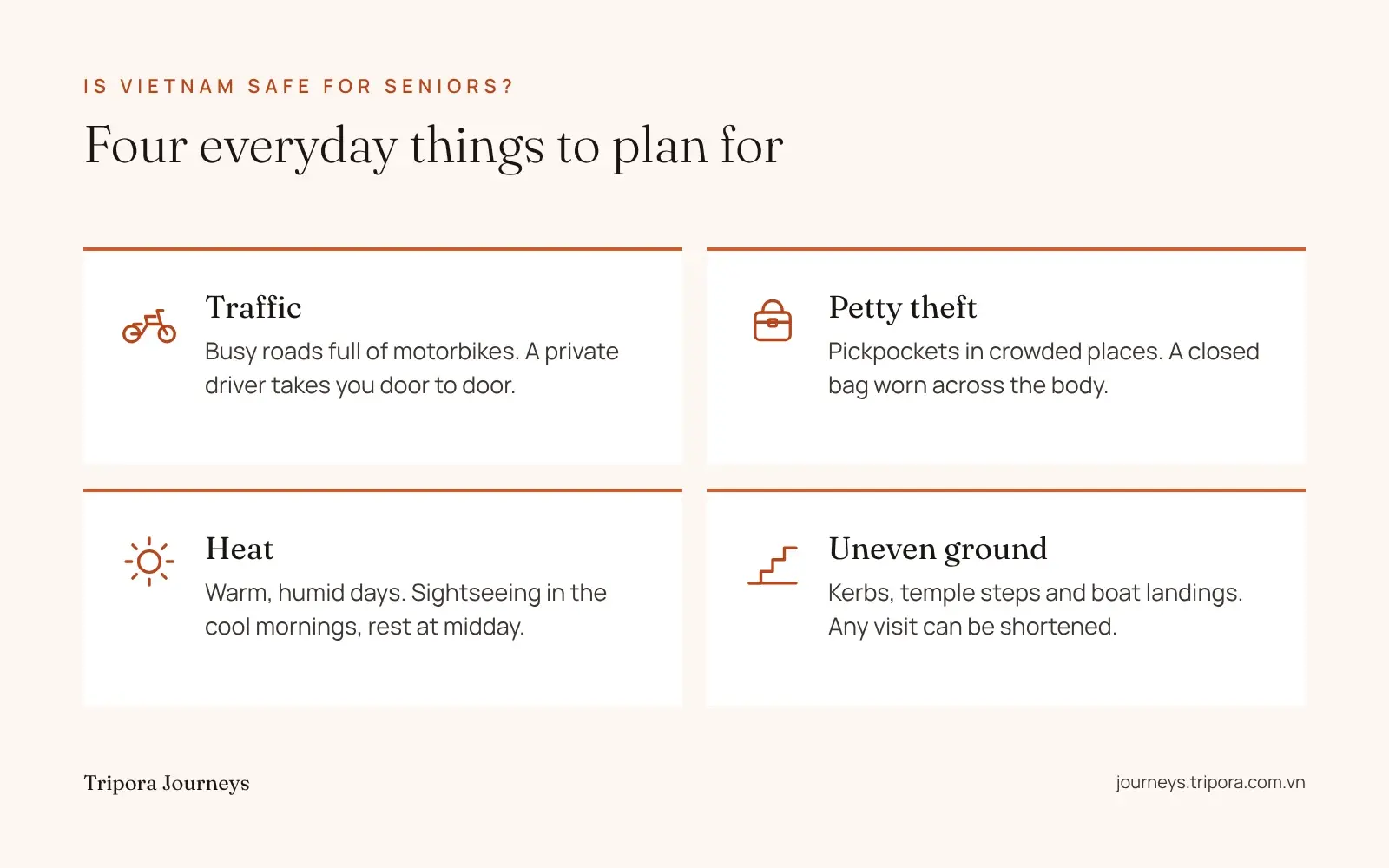
This guide goes through each of them plainly, and what you can do about them.
What do official travel advisories say about Vietnam?
Your own government's travel advice is the place to start, and it is worth reading before you book and again before you fly. The UK, Australia, the United States and New Zealand all publish advice on Vietnam, covering crime, road safety, the weather, local laws and entry rules, and they update it when things change.
We would rather point you to them than summarise them, because the wording changes and the latest version is the one that counts:
- UK Foreign, Commonwealth & Development Office: Vietnam travel advice
- Australian Government Smartraveller: Vietnam
- US Department of State: Vietnam international travel information
If you live elsewhere, look for the equivalent page from your own government.
Is crime a problem for visitors to Vietnam?
The crime most visitors come across is petty theft: pickpocketing and phones or bags snatched in busy streets, markets and night-time crowds. It is the same kind of opportunistic theft you would guard against in any large, busy city.
A few simple habits make a real difference:
- Carry a small bag that closes, worn across your body, and keep your phone in it rather than in your hand by the roadside.
- Leave your passport and most of your cash in the hotel safe, and carry only what you need for the day.
- Take out cash inside a bank or your hotel rather than at a street-side machine.
- In the old quarters and markets, let your guide walk with you. They know which corners are crowded and when.
How dangerous is the traffic in Vietnam?
The traffic is the thing most travellers notice first, and it is the main everyday risk. Hanoi and Ho Chi Minh City are full of motorbikes, pavements are often used for parking, and crossing a busy road can look impossible at first.
Video: Trần Tú, Sandeep Kumar, Thuan Pham, tan hong thai, Pexels License, source
It becomes manageable once you know how it works. Cross slowly and at a steady pace, without running or stepping back suddenly, so riders can see where you are going and steer around you. On a guided day, your guide leads the way across.
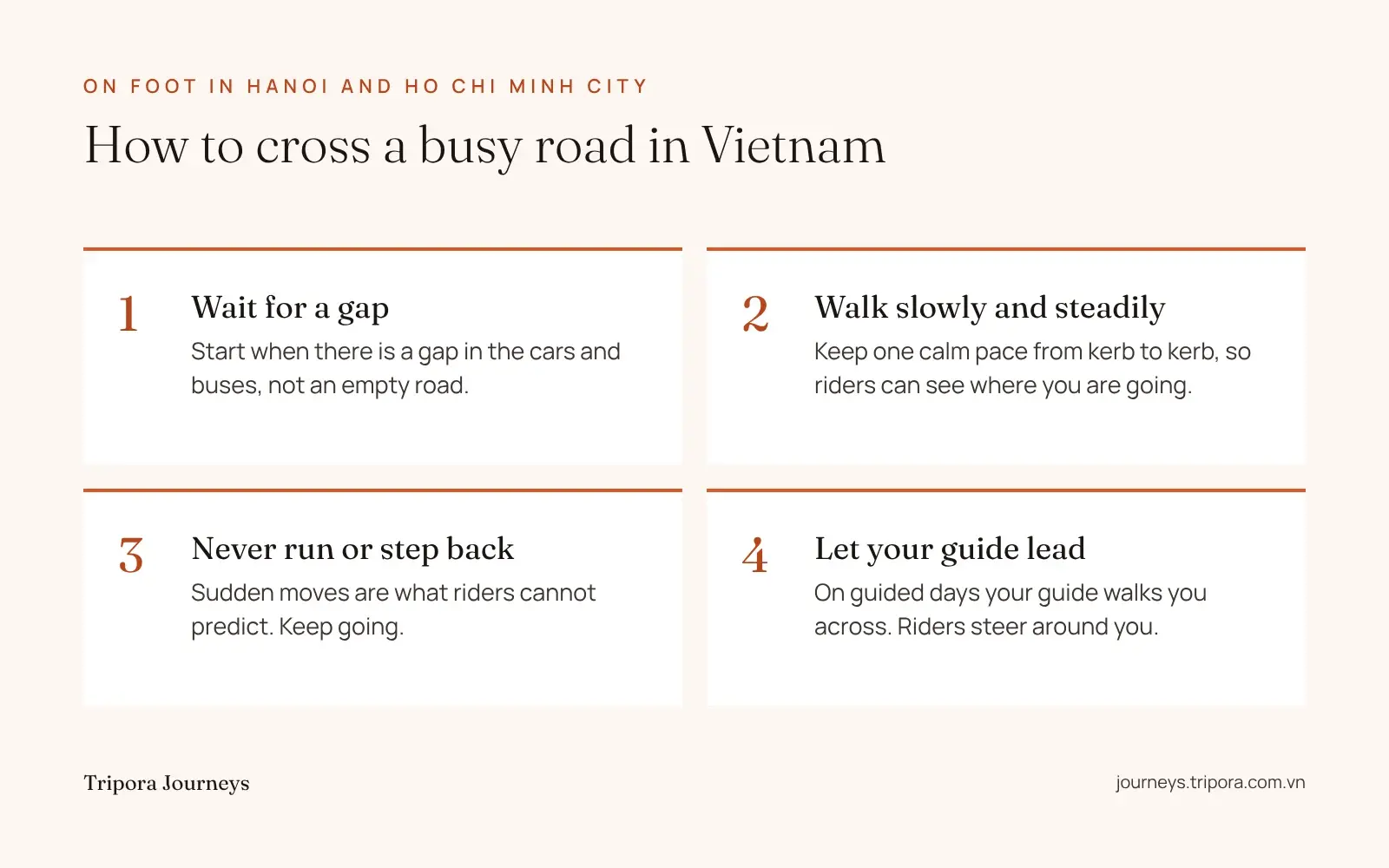
The bigger point is that you rarely need to be on the road yourself. On a private journey your driver takes you door to door, so there is no need for motorbike taxis, self-drive or long night drives on country roads. Where the route allows, our journeys use a short flight instead of a long day in the car.
How do seniors cope with the heat in Vietnam?
Heat and humidity, rather than walking, are what most travellers tell us they find hardest. Vietnam is warm for much of the year, and the South stays warm all year round.
The answer is mostly in the planning. We put sightseeing in the cooler mornings, keep the middle of the day for rest, and leave the late afternoon for a gentle walk or a boat. Drink water steadily through the day, choose bottled or filtered water, and wear light clothes and a hat.
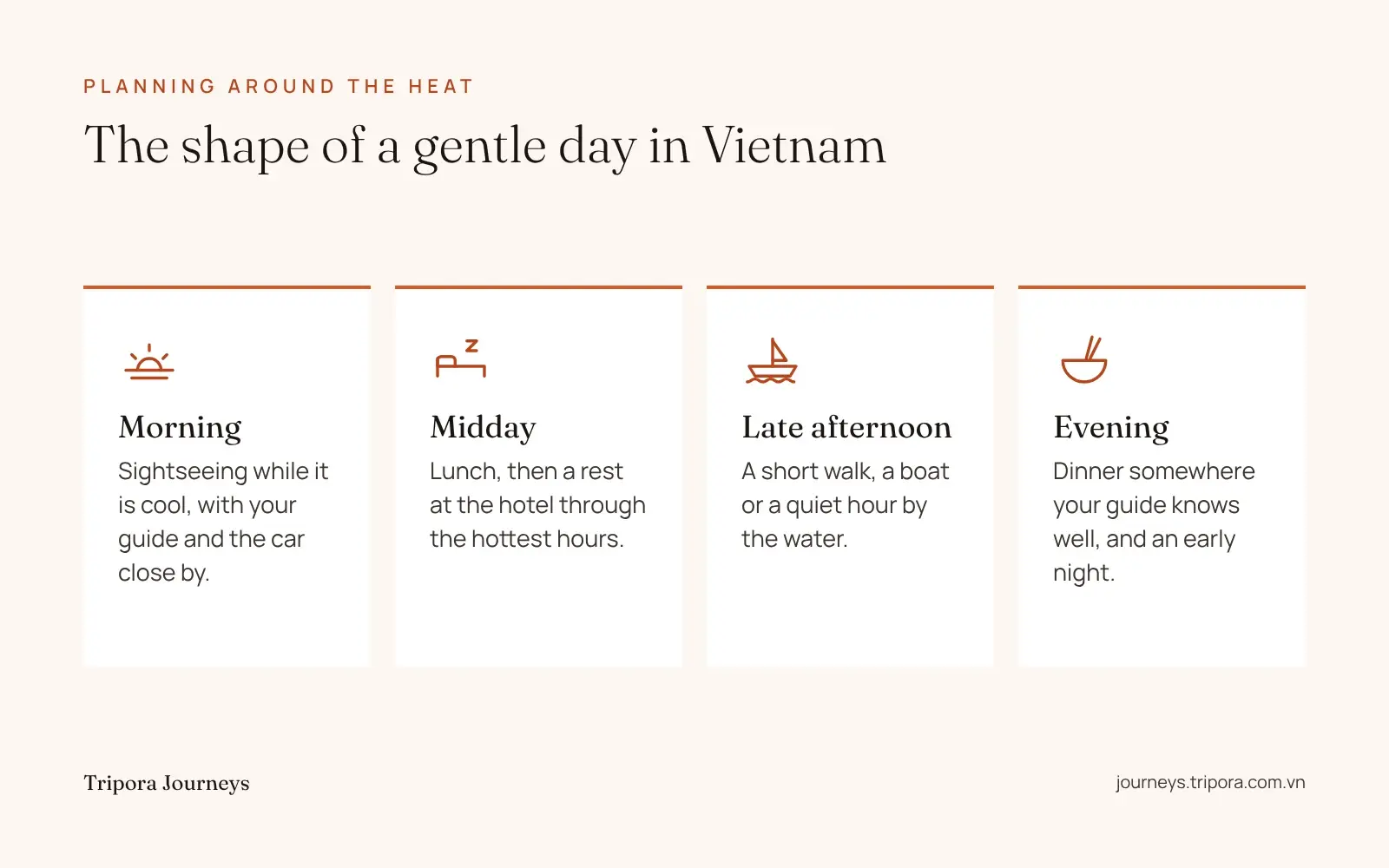
The month matters too. February to April suits a journey through all three regions, and it is wiser to skip the central coast, or keep days there flexible, from roughly September to December, when heavy rain and storms are possible. Our When to go page sets out every month, region by region.
What about walking, steps and boats?
Most days in Vietnam involve less walking than people expect, but the ground is not always even. Old-quarter pavements are broken up by steps, kerbs and parked motorbikes. Temples, the royal tombs and parts of the Hue Citadel have stone steps, and getting on and off a boat usually means one high step with a helping hand.
Every journey on our site says honestly how much walking there is each day, and where there are steps, boats or long drives. Central Heritage & Coast, for example, has one to three hours of easy walking a day, mostly on flat ground. Any visit can be shortened, or swapped for a drive or a boat, and there is always somewhere to sit.
If you use a stick, find stairs difficult or have any other mobility needs, tell us at the start. It changes which hotels, boats and visits we suggest.
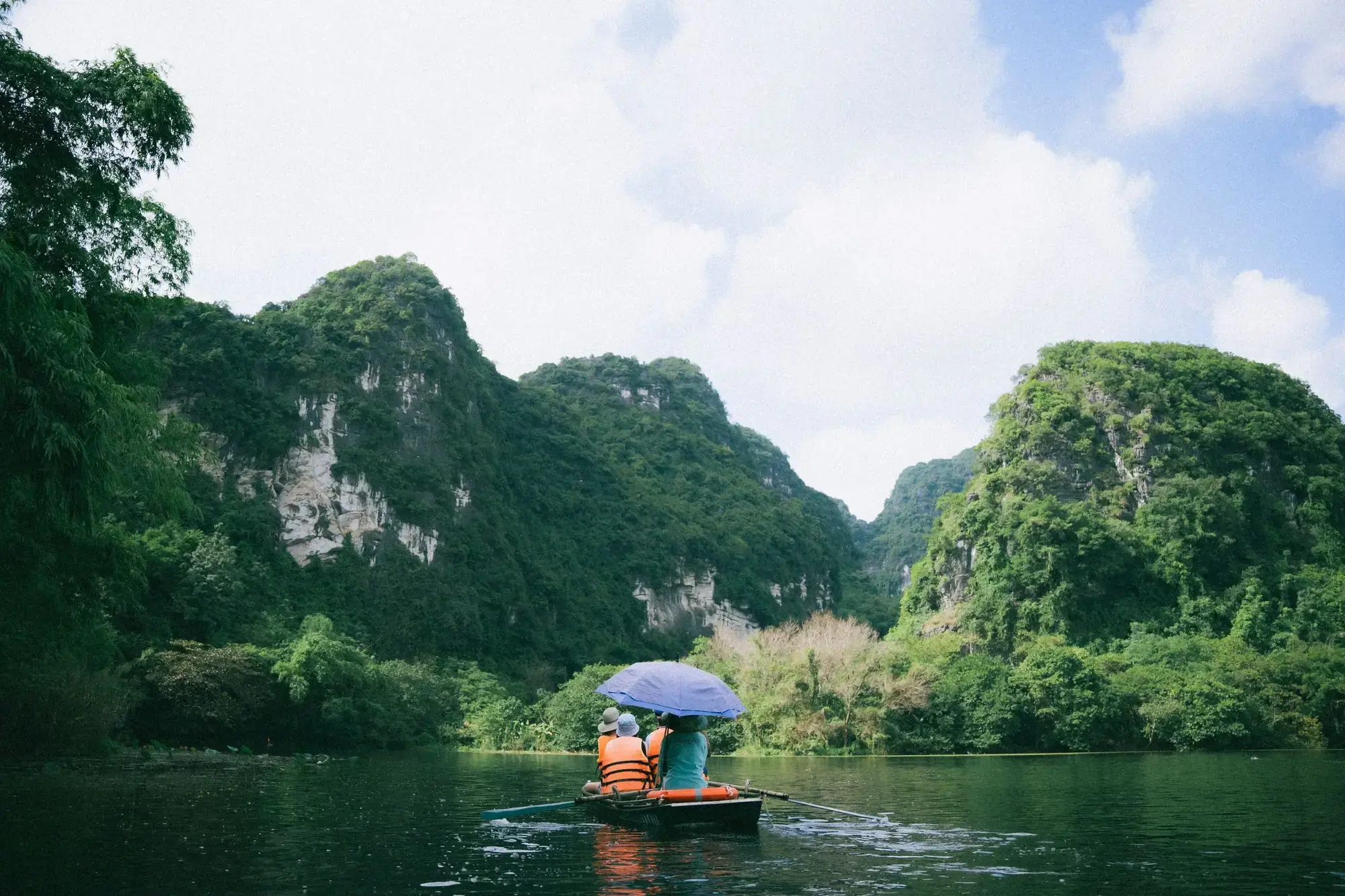
Photo: Bid, Pexels License, source
How does a private journey reduce the risks?
A private journey removes most of the situations where travellers get into difficulty. Your guide and driver are for you alone, the car is close by, and the day moves at your pace rather than a group's.
It also means there are people behind the plan. Tripora's coordinator team, an experienced team based in Vietnam, plans the journey with you. Before anything is confirmed, we check it with our licensed local partner, a Vietnamese tour operator, which then sends you its contract, takes the payment and looks after you on the ground with its guides, drivers and local team. We stay reachable throughout, by WhatsApp or email. How it works explains who does what.
What should you sort out before you go?
A little preparation at home makes the journey itself easier:
- Travel insurance. Take out a policy that covers cancellation and your health while abroad, and read its age limits and terms carefully. We do not sell insurance, so we cannot advise on a policy.
- Health advice. Read the health section of your government's travel advice in good time before you travel.
- Entry rules. Most visitors need a visa, and most can apply online for an e-visa. Check the rules for your passport on the official Vietnamese immigration website before you book flights.
- Copies and contacts. Keep a copy of your passport and insurance details on your phone and on paper, and leave your itinerary with someone at home.
- Tell us what matters. Mobility, diet, sleep, how much you like to walk: the more we know, the better we can plan around you.
Vietnam rewards an unhurried visit, and with sensible planning most travellers in their sixties, seventies and beyond find it easier than they expected. If you would like to talk it through, write to us and a coordinator from our team will reply personally.
Questions travellers ask
- Is Vietnam safe for travellers over 70?
Many travellers in their seventies visit Vietnam comfortably. The things to plan for are the heat, uneven ground and busy traffic, so a private journey with a gentle pace, a driver door to door and the right season makes the biggest difference.
- Is it safe to cross the road in Vietnam?
Yes, if you cross slowly and at a steady pace, without running or stepping back, so riders can steer around you. On guided days your guide leads you across, and on a private journey you are driven door to door.
- What is the biggest risk for older visitors to Vietnam?
For most older travellers it is the heat and humidity rather than crime. Sightseeing in the cooler mornings, resting in the middle of the day and choosing the right months for each region help most.
- Should I worry about pickpockets in Vietnam?
Petty theft happens in busy streets and markets, as in most large cities. Carry a small bag across your body, keep your phone out of reach of the roadside and leave your passport in the hotel safe.
- Where can I find official safety advice for Vietnam?
Read your own government's travel advice, such as the UK Foreign, Commonwealth & Development Office, Australia's Smartraveller or the US Department of State. Check it before you book and again shortly before you fly.